
AZEE Branding Solutions
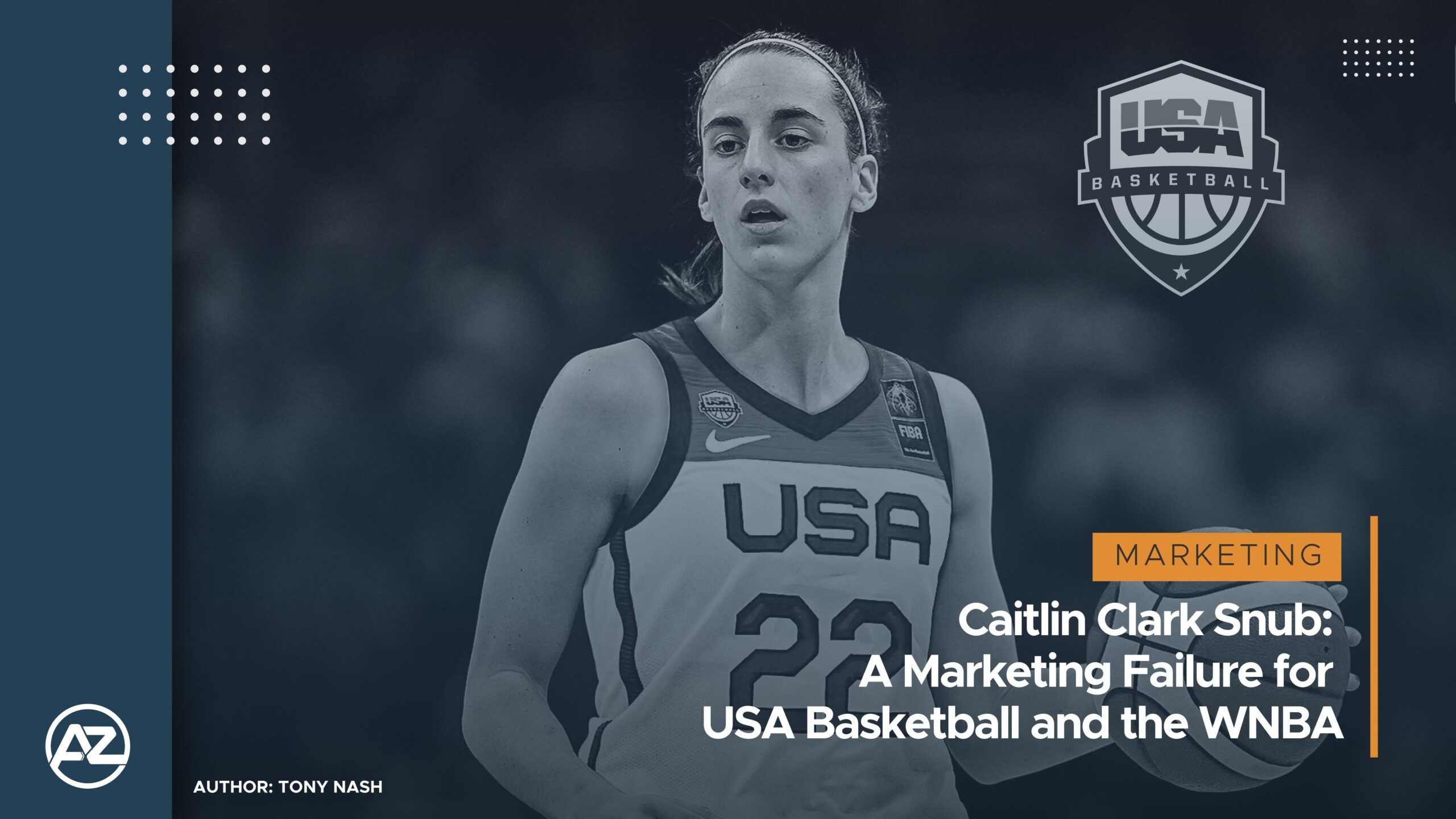
When it comes to sports, few moments are as powerful as the selection of an Olympic team. It’s a moment of pride, of dreams realized, and for fans, it’s a chance to see their heroes represent their country on the world stage. That’s why the decision to leave Caitlin Clark off the U.S. Olympic basketball team roster has ignited a firestorm of debate and disappointment.
Caitlin Clark, statistically one of the greatest women’s college basketball players of all time, has broken numerous records. She became the fastest player in NCAA history to reach 1,000 career points and set the single-season record for most three-pointers made. She is also the all time leading scorer in both men’s and women’s NCAA basketball history. Yet, despite her unparalleled performance and massive following, she was excluded from the roster, prompting widespread outrage.
ESPN’s Stephen A. Smith has had a lot to say about this topic over the past week and I have to say that I agree wholeheartedly with his take. He has voiced his strong disapproval of this decision. As Smith highlighted, this move undermines not just the sport but the broader mission to grow women’s basketball. The exclusion of Clark is not just a missed opportunity; it’s a failure to capitalize on a player who has brought unprecedented attention to the sport.
While Clark’s future in the WNBA remains to be seen, her current impact is undeniable. The argument has been made about whom she would replace. Brittany Griner, for instance, has been a polarizing figure due to her controversial remarks about America, including her refusal to stand for the national anthem, stating, “I honestly feel we should not play the national anthem during our season.” Although Griner and Clark play different positions, the sentiment among many is clear: Clark’s positive influence and fan base would be a better representation of Team USA.
Another contender is Chelsea Gray, often cited as the best point guard in the WNBA. However, Gray hasn’t played a single game this season, and Clark’s statistics, though early in her career, are slightly better than Gray’s. Despite the established merits of players like Gray, the undeniable fact is that Caitlin Clark has drawn more eyes to women’s basketball than anyone in history.
NBC has invested nearly $8 billion in Olympic coverage, and ad revenue is crucial. Reports suggest that 11 companies totaling 60 million+ in sponsorships have already been lost following the decision to leave Clark off the team. This isn’t just about sports; it’s about marketing. The WNBA has long struggled with viewership and revenue, yet here is a golden opportunity with Clark—a generational talent who has made women’s basketball must-see TV.
The committee’s reasoning that they were hesitant to include Clark because of the fact that her “millions of fans” would be upset at her limited playing time is baffling. Those “millions of fans” are precisely why she should be on the team. This echoes the impact of the 1992 Olympic “Dream Team,” which revolutionized the NBA globally. Many of todays NBA stars, like Luka Doncic, Nikola Jocic and Giannis Antetokounmpo, often credit the Dream Team for inspiring their careers. This is the kind of impact Caitlin Clark could have on women’s basketball.
The U.S. women’s team has won every gold medal since the 1992 Olympics, yet few people tune in. Attendance and TV ratings for women’s basketball at the Olympics remain low, even with consistent success. As WNBA legend Lisa Leslie pointed out, leaving Clark off the team is a monumental marketing misstep.
Marketable players have the potential to transform the league, and Caitlin Clark is a prime example of this. The 2024 WNBA season has seen a 60+% increase in ticket sales, a 236% surge in jersey sales, a 40% jump in TV ratings, and a 50% rise in league pass subscriptions compared to previous seasons. These impressive gains are not coincidental; they are a direct result of Clark’s immense popularity and the excitement she brings to the game.
Clark has captivated a new audience, drawing in fans who previously had little to no interest in women’s basketball. Her dynamic playing style and record-breaking performances have made her must-see TV, and her millions of followers eagerly tune in to watch her play. This influx of attention is precisely what the WNBA needs to grow its fanbase and increase revenue.
Denying Clark’s impact on these metrics is either willfully ignorant or driven by jealousy. The evidence is clear: her marketability has sparked renewed interest in the league, benefiting all players by bringing more eyes to the sport. This is a pivotal moment for the WNBA, and it is crucial to recognize and capitalize on the opportunities that players like Caitlin Clark present.
Michael Jordan entered the NBA in 1984 and although the league already had stars like Magic Johnson, Larry Bird, and Dr. j, it was still struggling to gain widespread fandom and popularity, and player wages were relatively low compared to today’s standards. Jordan wasn’t immediately better than everyone else, but he was incredibly marketable and drew in fans, revenue, and attention, lifting the entire league. As hall of famer Isaiah Thomas noted, “All of us, Magic, Bird, myself, we all ate off of Michael Jordan’s success.” Caitlin Clark has the potential to do the same for the WNBA if the league can see beyond its current biases and capitalize on her marketability.
I, like many others, had never watched a WNBA game before this year. Now, as a league pass subscriber, I’ve watched dozens of games, often choosing them over NBA playoff games. My 15-year-old daughter, an aspiring basketball player herself, is also now a fan—thanks entirely to Caitlin Clark. However, the negativity and infighting within the league are a turn-off. The WNBA must realize that more eyes on the league mean opportunities for all players to grow their own followings and earn more money .
The decision to leave Caitlin Clark off the U.S. Olympic team is a short-sighted one that misses a significant opportunity to grow the sport of women’s basketball globally. The WNBA brand is at risk of failure if it continues to ignore such pivotal moments. The league and its players need to embrace this moment, set aside their egos, and recognize the immense marketing potential Clark brings. This is a crucial juncture that could define the future of the league and elevate the WNBA brand. Let’s hope they seize this opportunity before it slips away.

Connect With Us!
Connect with us today to discover how we can help you grow your brand from A to Z
Related Articles
Caitlin Clark Is Out…Now We Find Out If the WNBA Was Ever Really In
AZEE Branding SolutionsThe 2025 WNBA All-Star Weekend will be the moment of truth. It will reveal, for better or worse, whether the WNBA has actually built something sustainable from Caitlin Clark’s once-in-a-generation momentum or whether they’ve simply been riding...
How Stanley and New Balance Transformed Their Brands by Marketing to Women
AZEE Branding SolutionsIn today's fast-paced market, brands that once catered primarily to men have found massive success by shifting their focus to women. Through social media, influencer marketing, and strategic rebranding, companies like Stanley and New Balance...

The NBA All-Star Game Is Broken: Here’s How to Fix It Before Fans Stop Caring
AZEE Branding SolutionsThe NBA All-Star Game, once a thrilling showcase of the league’s best talents, has become little more than a glorified layup line. The lack of defense and competitive spirit has left fans and analysts alike yearning for something more...