
AZEE Branding Solutions
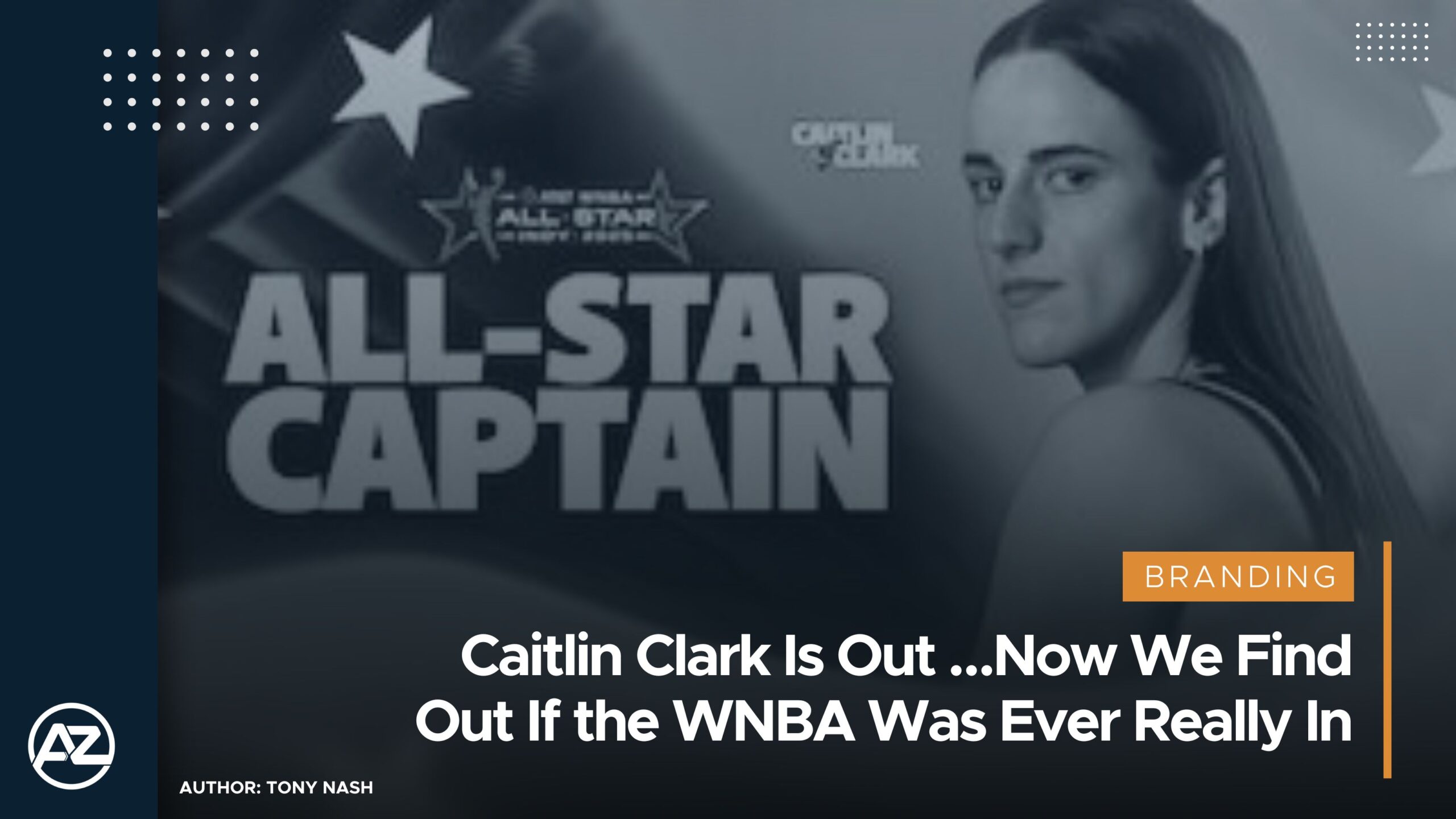
The 2025 WNBA All-Star Weekend will be the moment of truth. It will reveal, for better or worse, whether the WNBA has actually built something sustainable from Caitlin Clark’s once-in-a-generation momentum or whether they’ve simply been riding her coattails while fumbling the bag the whole time.
This weekend, the league’s biggest star won’t be suiting up. Clark is sidelined with a groin injury, and the question is simple: does this All-Star Game still move the needle without her on the court?
Because if it doesn’t, the league doesn’t get to blame fans. It doesn’t get to blame media bias or sexism or attention gaps. It’ll mean they’ve failed to capitalize on the most powerful branding opportunity in league history.
And if it does perform well, let’s not pretend this was organic. The spark is still Clark. Even from the sideline.
Rewind: The WNBA’s Caitlin Problem Isn’t Her Presence. It’s Their Insecurity About It
Let’s get straight to the point: Caitlin Clark isn’t just a player with a nice shot and a viral highlight reel. She is a revenue engine. A global brand. A fanbase catalyst. And for almost two years now, instead of embracing this with full-throated clarity, the WNBA has been treating her like an inconvenience.
If you’ve read my past articles on this topic, you know I’ve said this from the jump. The WNBA is showing a strange mix of gratitude and resentment toward the thing that is saving the league. It’s like they’re embarrassed to admit the truth: she’s the reason we’re here right now.
And rather than steering the ship with her stardom front and center or rather than using her rise to elevate everyone in the league, they’ve chosen to.
- Dismiss her effect as a “media creation.”
- Downplay the fanfare around her.
- Pander to legacy fans who think Clark is stealing shine from long-ignored veterans.
They’re not leveraging the moment. They’re tiptoeing through it like it’s a landmine.
The Numbers Don’t Lie: Caitlin Clark Moves the Needle
Here’s what you can’t spin:
- TV Ratings: WNBA games featuring Clark see viewership increases of 50–70%, averaging 750k–950k viewers, compared to a pre-Clark average around 200k–250k. That’s more than doubling for most matchups.
- Merch Sales: Clark’s Fever jersey was the second best-selling basketball jersey in North America this year, male or female. Only Steph Curry outsold her.
- Ticket Revenue: The Indiana Fever went from empty lower bowls to selling out NBA arenas. That’s a 265% increase in average attendance.
- Sponsorship & Local Economy: Clark alone is credited with contributing $82.5 million in economic impact and $36.5 million to Indiana’s GDP. She’s not just a sports story, she’s a state-level financial asset.
The bottom line? This isn’t hype. This is impact. Real dollars. Real growth. So why is the league pretending this is some “collective effort” story when it’s clear what (and who) is driving the surge?
The Physical Toll: Is the League Letting Stars Get Mauled for Ratings?
Let’s talk about the elephant in the gym: the physicality being allowed against Clark and the Indiana Fever isn’t normal. It’s not “playoff intensity.” It’s reckless.
Game after game, Clark is knocked to the ground with little protection from the refs. Obvious body checks. Hip tosses. Screens that look more like shoulder shoves. And the league’s officiating crew shrugs it off like it’s nothing.
So now Clark is injured and it’s very easy to connect the dots. You let defenders treat your biggest star like a crash-test dummy? This is the result.
You don’t see this in the NBA. You don’t let LeBron or Steph get hacked for the sake of “letting them play.” Because you know what they’re worth to your bottom line.
If the WNBA won’t protect it superstars, what message does that send to future stars who might bring this kind of attention? That the league will cash your checks but not have your back?
Rivalries Sell — Pandering Doesn’t
Look, we get it. Not everyone likes Caitlin Clark. That’s sports. Rivalries make this game worth watching.
There was a time when:
- Bird and Magic didn’t like each other.
- LeBron and Steph had real tension.
- Kobe and Shaq couldn’t share a locker room.
- Jordan hated Isaiah Thomas with a passion.
That’s not a problem. That’s ratings gold. It’s what makes you tune in, to see the fire, the friction, the stakes.
But instead of leaning into that, Cathy Engelbert and WNBA leadership seem desperate to keep things safe and sanitized. They don’t want Clark to be a “disruptor.” They want her to fit the brand mold. Be quiet. Be humble. Don’t overshadow.
You know what would be smart branding? Spotlighting those rivalries. Creating real narrative arcs. Giving fans something to choose sides on.
But instead, the WNBA keeps feeding the jealousy and racial subtext by pretending it doesn’t exist — or worse, pandering to it.
They’re too worried about offending the old guard than embracing the future.
The All-Star Game Without Clark: A Case Study in Missed Opportunity
Let’s call it what it is: this All-Star Game should have been Caitlin Clark’s coronation. A 3-point shootout moment. A future MVP performance. A chance to put a massive exclamation point on the first half of the season.
Instead? She’s sidelined. And now we get to see what the league has built around her…if anything.
Will this weekend still draw millions of eyeballs?
Will people care if she’s just coaching, not playing?
Will fans tune in to see the “next big thing,” or will they just check Twitter to see if Clark showed up in a walking boot?
Because if the WNBA can’t make this weekend sizzle without her actually on the court, then what have they really built?
Conclusion: The WNBA’s Moment of Truth
Let’s be crystal clear:
Caitlin Clark isn’t the whole league. She’s not the only star. But she is the catalyst that brought the world’s attention to women’s basketball in a way we have never seen.
The WNBA has had almost two years of momentum to work with. This weekend will show whether they’ve built something sustainable from that spark, or whether this really is just the Caitlin Clark Effect and nothing more.
Because if the All-Star numbers crater without her in uniform, the league doesn’t get to blame casual fans, or ESPN, or “sexism.” They’ll have to face the truth: they had lightning in a bottle, and they were too scared to use it.
Just look at the NBA. When Michael Jordan exploded onto the scene, the league didn’t downplay his popularity or protect the egos of veteran stars. They leaned in, built their brand around him, marketed the rivalries, sold the sneakers, and turned the league into a global juggernaut. Jordan wasn’t just a star , he was the engine. The NBA didn’t fight it, they fed it.
Remember, if people don’t know you, you have a marketing problem, but if people don’t choose you, you have a branding problem. Everybody knows the WNBA exists at this point because of Caitlin Clark, but will they choose to watch without her? This weekend Will give us that answer.

Connect With Us!
Connect with us today to discover how we can help you grow your brand from A to Z
Related Articles
How Stanley and New Balance Transformed Their Brands by Marketing to Women
AZEE Branding SolutionsIn today's fast-paced market, brands that once catered primarily to men have found massive success by shifting their focus to women. Through social media, influencer marketing, and strategic rebranding, companies like Stanley and New Balance...

The NBA All-Star Game Is Broken: Here’s How to Fix It Before Fans Stop Caring
AZEE Branding SolutionsThe NBA All-Star Game, once a thrilling showcase of the league’s best talents, has become little more than a glorified layup line. The lack of defense and competitive spirit has left fans and analysts alike yearning for something more...
Love Is Blind Masters Emotional Manipulation for Profit
AZEE Branding SolutionsAt its core, "Love Is Blind" isn’t just a reality show—it’s a brand experience. Netflix has positioned it as an experiment in human connection, wrapped in the aesthetic of a modern fairy tale. The show's brand leans heavily on: Emotional...
Recent Comments