AZEE Branding Solutions
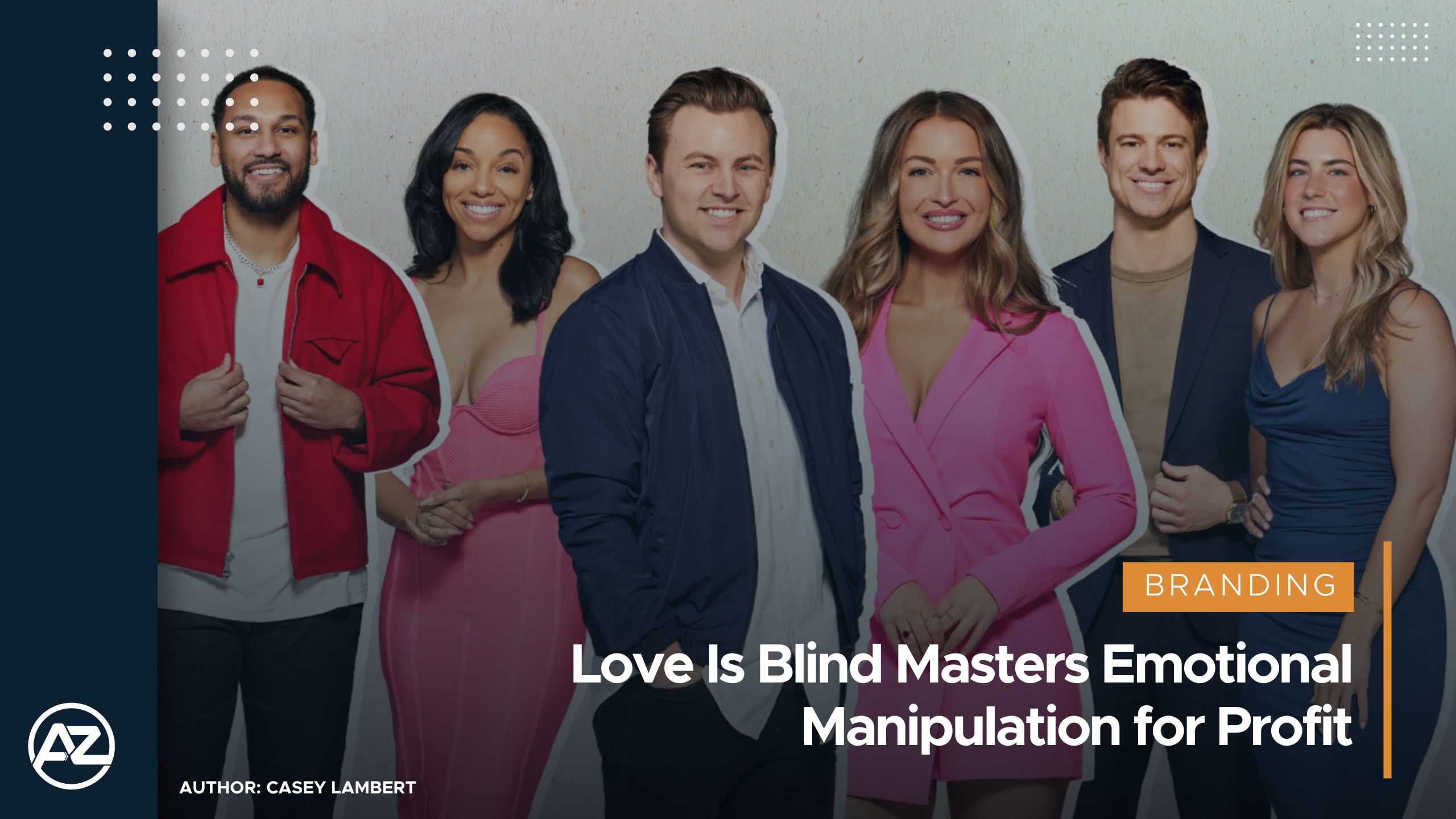
At its core, “Love Is Blind” isn’t just a reality show—it’s a brand experience. Netflix has positioned it as an experiment in human connection, wrapped in the aesthetic of a modern fairy tale. The show’s brand leans heavily on:
- Emotional Manipulation Disguised as Science – The premise suggests a revolutionary approach to love, removing physical attraction from the equation. In reality, it’s an artificially constructed environment designed to create emotional instability and dramatic payoffs.
- A Global Franchise Model – With spin-offs in Brazil, Japan, Sweden, and India, “Love Is Blind” has been engineered to be adaptable across cultures, reinforcing its status as a global entertainment powerhouse.
- The Illusion of Social Commentary – The show markets itself as a profound look at modern relationships while delivering the same manufactured chaos as reality TV staples like “The Bachelor” and “Too Hot to Handle.”
Manufactured Love, Manufactured Drama
The genius of “Love Is Blind” is how it constructs a completely artificial yet seemingly organic journey to love. The formula is simple:
- The Pods – Creating a False Sense of Emotional Depth
Contestants communicate through a wall, which supposedly allows for deeper connections. In reality, they’re sleep-deprived, emotionally vulnerable, and primed for impulsive decision-making. - The Engagements – Locking in the Drama
By forcing couples to get engaged before seeing each other, the show ensures that stakes are maximized, making it almost impossible for them to walk away without causing a spectacle. - The Honeymoon Phase – Injecting Real-World Chaos
After meeting, the couples are whisked away to a luxurious retreat where alcohol flows freely, and insecurities begin to surface—further fueled by strategic editing. - The Reality Check – Testing the Brand Narrative
The couples return to the real world, meet each other’s families, and suddenly, the illusion cracks. Job differences, financial stress, and personal values (which could have been discussed in the pods but mysteriously weren’t) come into play. - The Weddings – The Ultimate Payoff
The final episode delivers the money shot—will they or won’t they say ‘I do’? The brand wins either way. If they get married, Netflix has created a new love story. If they leave at the altar, it’s meme-worthy content that fuels engagement.
The Ratings and the Cash Machine
“Love Is Blind” consistently ranks among Netflix’s top-performing reality shows. The U.S. version’s third season reportedly had 47.6 million hours watched in just its first few days of streaming. “Love Is Blind Brazil” and “Love Is Blind Japan” followed similar trends, proving that drama, heartbreak, and poor decision-making are universal entertainment.
And let’s talk money. While Netflix doesn’t disclose exact figures, “Love Is Blind” and its spin-offs bring in millions in ad revenue, sponsorship deals, and streaming subscriptions. Reality shows are dirt cheap to produce compared to scripted series. The estimated production cost per episode of “Love Is Blind” is around $400,000 to $500,000, which is pennies compared to a scripted Netflix drama.
And what do the contestants get for emotionally humiliating themselves in front of the world? A big, fat NOTHING. That’s right—contestants on “Love Is Blind” reportedly make around $1,000 per week while filming, and even that’s just barely above minimum wage when you break it down hourly. No royalties, no streaming residuals—just the chance to be memed into oblivion and maybe, just maybe, land a Revolve sponsorship if they play their cards right.
The Evolution of Reality TV: How Did We Get Here?
Back in the early 2000s, reality TV was different. Shows like “The Real World” and “Road Rules” were messy, but in a genuine way. Sure, there was drama, but it wasn’t as manufactured. Cast members actually had jobs, formed friendships, and sometimes even made it through a season without flipping a table.
Then came the mid-2000s dating show era: “Rock of Love,” “Flavor of Love,” and “The Bachelor” (which, let’s be honest, is just the fancier, old-money cousin of “Love Is Blind”). These shows embraced the ridiculousness of dating on TV but still followed a somewhat organic formula.
Today’s reality shows? They’re a full-blown social experiment with no actual scientific backing. “Love Is Blind” and its reality relatives differ from their predecessors in a few key ways:
- Extreme Psychological Pressure – Producers know exactly how to push contestants’ emotional buttons, engineering explosive fights and shocking betrayals by dangling just enough manipulation in front of them.
- Hyper-Edited Storylines – The average viewer doesn’t realize how much of what they’re seeing is completely out of context. That one girl who seemed like a total villain? Maybe she was edited to seem that way because her real personality didn’t fit the producer’s desired storyline.
- Fast-Tracked Relationships – Shows like “Rock of Love” at least let people see each other before deciding if they wanted to spend a lifetime together. “Love Is Blind” takes that away, making the relationships so rushed that failure is practically guaranteed.
Why Are We So Hooked?
Despite knowing reality TV is about as real as a Kardashian’s face, people still eat this stuff up. Why?
- Schadenfreude (A.K.A. Enjoying Other People’s Pain) – Watching someone else’s relationship implode in real-time makes us feel better about our own questionable dating choices.
- The Fantasy Element – The idea that love can transcend physical attraction is a romantic one. Too bad the show proves time and time again that physical attraction actually does matter, and so does knowing whether your fiancé secretly believes the Earth is flat.
- Social Media Engagement – These shows are tailor-made for viral moments. The more shocking the drama, the more people talk about it on Twitter, TikTok, and Reddit. Producers aren’t just making a show—they’re making content designed to be dissected by the internet.
The Future of Reality TV: Will We Ever Learn?
Netflix and other streaming platforms have realized that drama = views, and views = money. As long as people are willing to tune in for trainwreck romances and producer-fueled meltdowns, these shows aren’t going anywhere.
The question is: will we ever get tired of them? Or are we destined to keep watching season after season of hot people making bad decisions while a smug host reminds us that “love is truly blind”—even when all evidence suggests otherwise?

Connect With Us!
Connect with us today to discover how we can help you grow your brand from A to Z
Related Articles
Caitlin Clark Is Out…Now We Find Out If the WNBA Was Ever Really In
AZEE Branding SolutionsThe 2025 WNBA All-Star Weekend will be the moment of truth. It will reveal, for better or worse, whether the WNBA has actually built something sustainable from Caitlin Clark’s once-in-a-generation momentum or whether they’ve simply been riding...
How Stanley and New Balance Transformed Their Brands by Marketing to Women
AZEE Branding SolutionsIn today's fast-paced market, brands that once catered primarily to men have found massive success by shifting their focus to women. Through social media, influencer marketing, and strategic rebranding, companies like Stanley and New Balance...

The NBA All-Star Game Is Broken: Here’s How to Fix It Before Fans Stop Caring
AZEE Branding SolutionsThe NBA All-Star Game, once a thrilling showcase of the league’s best talents, has become little more than a glorified layup line. The lack of defense and competitive spirit has left fans and analysts alike yearning for something more...