AZEE Branding Solutions
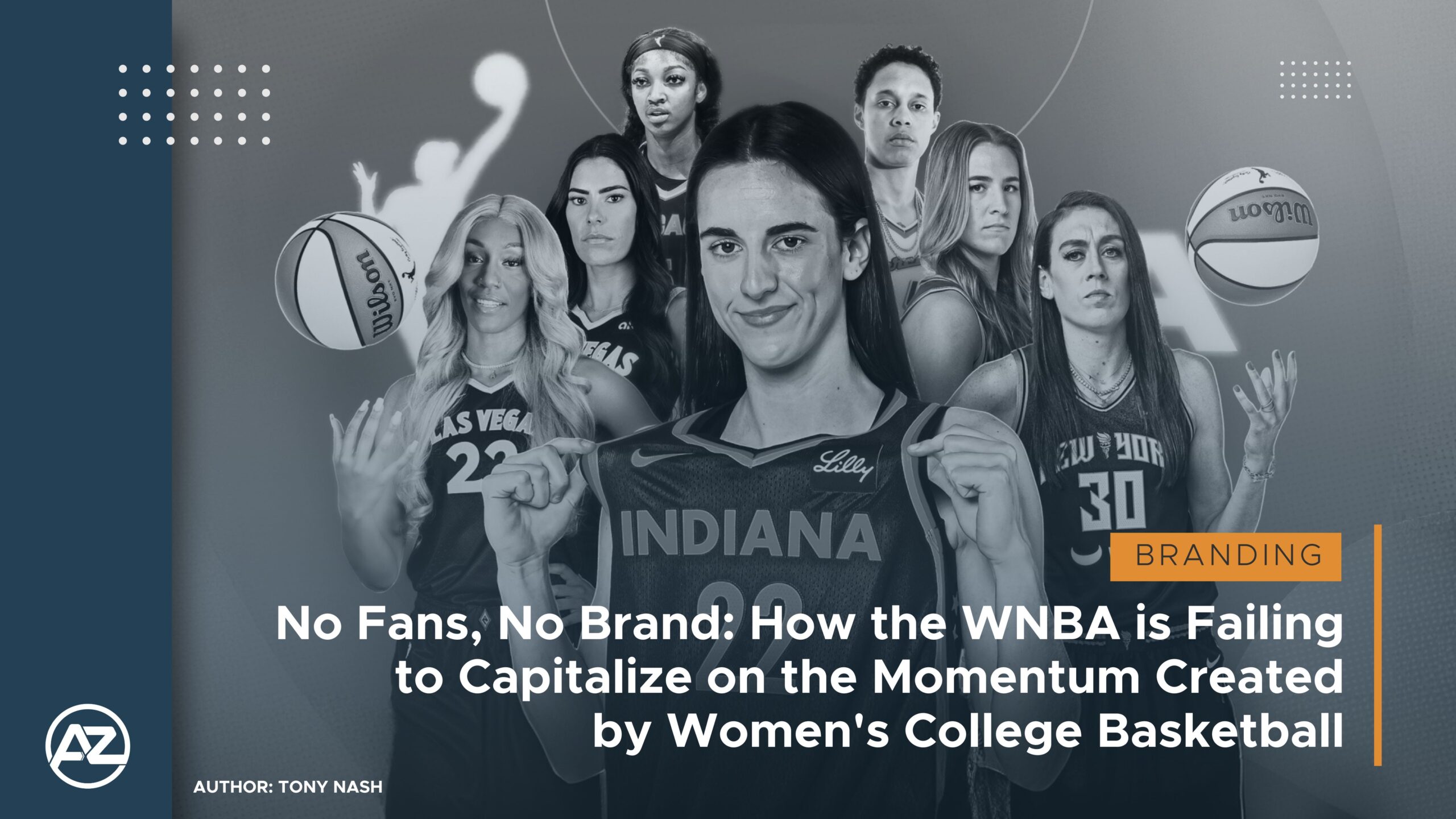
No fans, no brand. This principle highlights a critical issue facing the WNBA today. Despite the growing popularity of women’s college basketball, particularly through stars like Caitlin Clark and Angel Reese, the WNBA is struggling to capture brand loyalty, awareness, and clout. The league’s shortcomings in live event management, broadcast quality, and player marketing are hindering its ability to convert the collegiate excitement into professional support.
The league has much to learn from the NBA in terms of live events and broadcasts. The NBA excels at creating engaging and accessible experiences for fans, both in arenas and through broadcasts. In contrast, the WNBA has struggled, particularly evident during the recent preseason debacle with the League Pass. As one Twitter user, Nancy Armour, bluntly stated, “What a complete joke. The W is not ready for prime time. Not even close.”
This criticism is backed by widespread frustration from fans and media alike. Lindsay Schnell of USA Today tweeted, “Most anticipated @WNBA season in years and 1) there’s no score or time on the live stream & 2) the stats on the official WNBA page aren’t working. THIS LEAGUE DOES IT TO ITSELF.” Another fan tweeted, “@WNBA league pass app is not working….#WNBA broke the internet and it’s only pre-season.”
These issues indicate a significant gap in the WNBA’s ability to capitalize on its rising stars and growing interest. To build a loyal fan base, the WNBA needs to ensure that its most popular players and up and coming stars are prominently featured and easily accessible through reliable streaming services and effective marketing. Improving the quality and accessibility of live events and broadcasts is crucial. While the WNBA League Pass subscriptions are up 70%, this success is marred by technical difficulties and availability issues. The app’s failure to show preseason games accurately reflects a lack of preparation for the league’s anticipated growth. For a league aiming to expand its fan base, ensuring reliable and comprehensive access to games is crucial.
Another glaring issue is the league’s inability to effectively market its stars. Caitlin Clark and Angel Reese have garnered massive followings in college, yet the WNBA has struggled to maintain that momentum. Unlike the NBA, which expertly promotes its top players and rising stars through television and social media, the WNBA has not maximized these channels. Even during the preseason, popular players’ games were not accessible, which is a missed opportunity for building excitement and engagement.
As a first-time WNBA League Pass subscriber, I watched my first every WNBA game this season. I have enjoyed the excitement and intensity Caitlin Clark brings to the game. Like many others, I was drawn to the WNBA after following the thrilling women’s college basketball season. As a lifelong basketball player, fan, and now high school basketball coach, I have already found myself choosing to watch the Indiana Fever over some NBA playoff games this year to the great surprise of my three sons.. The Fever has done a commendable job capturing the hype surrounding Caitlin Clark. However, it seems the league as a whole is struggling to capitalize on this newfound exposure.
Many veteran players and former stars appear to be envious of the attention Clark is receiving, often making snarky comments. During games, opponents frequently assign their best defenders to guard her tightly for the entire length of the court, and she has faced several hard fouls that seem intended to send a message. Although I enjoy the physical play, it’s clear that some players are determined to prove that Clark isn’t worth the hype. This is ironic because the hype surrounding Clark ultimately benefits the entire league. She has already driven up ticket sales, increased jersey sales, attracted new sponsors, and the attention she has garnered has secured charter flights for the entire league. The WNBA and its players need to recognize that Clark’s presence is lifting the entire league and seize this opportunity to grow and prosper.
Despite the excitement Clark brings, I find WNBA games less engaging than college games. There’s a lot of isolation play and some sloppy performances. I’m sticking around mainly as a fan of Clark to see what she can achieve, but the WNBA must capitalize on this momentum quickly. If they don’t, they risk missing out on a golden opportunity to grow the league and make more money for everyone involved.
Another issues that detracts fans like me is the constant demands for “equal pay”. The WNBA generates significantly less revenue than the NBA. The NBA brings in approximately $10 billion annually, while the WNBA’s revenue is around $60 million. This stark difference highlights the financial challenges the WNBA faces. The top 5 highest-paid NBA players earn about 1% of the league’s revenue, whereas the top 5 highest-paid WNBA players earn around 3% of the league’s revenue. Demands for equal pay would imply many of the players would make less than they do now if you use simple business economics. The financial realities of the WNBA do not support more pay for the players at this time due to its lower revenue and operating losses each year. To bridge this gap, the WNBA must focus on innovative financial strategies, enhancing fan engagement, and maximizing sponsorship opportunities. Recognizing that the league operates as a business, it needs to align its financial and marketing strategies to ensure sustainable growth and future success.
The WNBA stands at a crucial juncture. As Jesse Cole outlines in “Fans First,” transforming a sports brand into a global success requires innovative thinking and a fan-centered approach. The WNBA must leverage the current momentum, market its stars effectively, and improve its game presentation and accessibility. Failure to do so could result in missed opportunities and a return to mediocrity. The league has the potential for massive success, but it must act quickly and strategically to realize it.
The league has the talent and potential to capture new brand loyalty and awareness, but it must address its current shortcomings. By improving live event management, marketing strategies, and leveraging its stars, the WNBA can build a stronger, more engaged fan base. The league needs to act decisively to ensure its future success and capitalize on the growing interest in women’s basketball. They must face the harsh reality…No fans, no brand.

Connect With Us!
Connect with us today to discover how we can help you grow your brand from A to Z
Related Articles
Caitlin Clark Is Out…Now We Find Out If the WNBA Was Ever Really In
AZEE Branding SolutionsThe 2025 WNBA All-Star Weekend will be the moment of truth. It will reveal, for better or worse, whether the WNBA has actually built something sustainable from Caitlin Clark’s once-in-a-generation momentum or whether they’ve simply been riding...
How Stanley and New Balance Transformed Their Brands by Marketing to Women
AZEE Branding SolutionsIn today's fast-paced market, brands that once catered primarily to men have found massive success by shifting their focus to women. Through social media, influencer marketing, and strategic rebranding, companies like Stanley and New Balance...

The NBA All-Star Game Is Broken: Here’s How to Fix It Before Fans Stop Caring
AZEE Branding SolutionsThe NBA All-Star Game, once a thrilling showcase of the league’s best talents, has become little more than a glorified layup line. The lack of defense and competitive spirit has left fans and analysts alike yearning for something more...